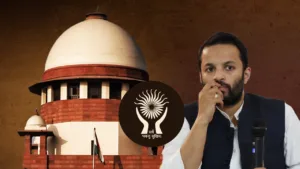
Supreme Court Sets Aside Day to Hear Arguments on Controversial Waqf Act


Supreme Court to Focus Entire Day on Waqf Law Dispute
The Supreme Court, led by Chief Justice B.R. Gavai, has decided to dedicate an entire day, May 20, to hearing arguments regarding a potential interim stay on the provisions of the recently passed Waqf (Amendment) Act, 2025. This decision comes after the court first heard the case just days after Chief Justice Gavai assumed office.
Background of the Waqf Law Challenge
The Waqf law challenge has been a significant legal battle. The case first came before Justice Sanjiv Khanna, the former Chief Justice, on May 5. However, due to his imminent retirement, Justice Khanna expressed reluctance to continue overseeing the case and instead passed it on to his successor, Chief Justice Gavai.
Arguments for and Against the Waqf Amendments
Both Solicitor General Tushar Mehta, representing the government, and senior advocate Kapil Sibal, representing the petitioners, suggested scheduling the hearing for a later date to allow for thorough review of the case materials. The petitioners argue that the 2025 amendments infringe on the rights of Muslims to manage their religious affairs and properties. They contend that the amendments fundamentally alter the governance, creation, and protection of Waqf properties, which are Islamic endowments dedicated to religious and charitable purposes.
In contrast, the government maintains that the amendments are necessary to combat rampant encroachments on government and private properties in the name of Waqfs. They highlight a “phenomenal increase” in Waqf assets between 2013 and 2024 as justification for the changes.
Next Steps in the Case
Chief Justice Gavai has made it clear that the court will prioritize this case on May 20. The lawyers are expected to submit consolidated notes outlining their arguments and legal points beforehand.
Key Concerns Raised in the Petitions
The petitions raise several key concerns, including:
- The amendments infringe upon and prejudice the rights of Muslims across the country.
- They fundamentally alter the governance, creation, and protection of Waqf properties.
- The enhanced role of the state in waqf administration impinges on the right of the Muslim community to manage its institutions.
- The amendments omit the concept of Waqf-by-User, which the Supreme Court has previously recognized.
- The inclusion of non-Muslim members in Waqf administrative bodies raises concerns about the character and management of these religious endowments.