Oil Spill Fears Rise as Container Ship Sinks Off Kerala Coast

Container Ship Sinks Off Kerala
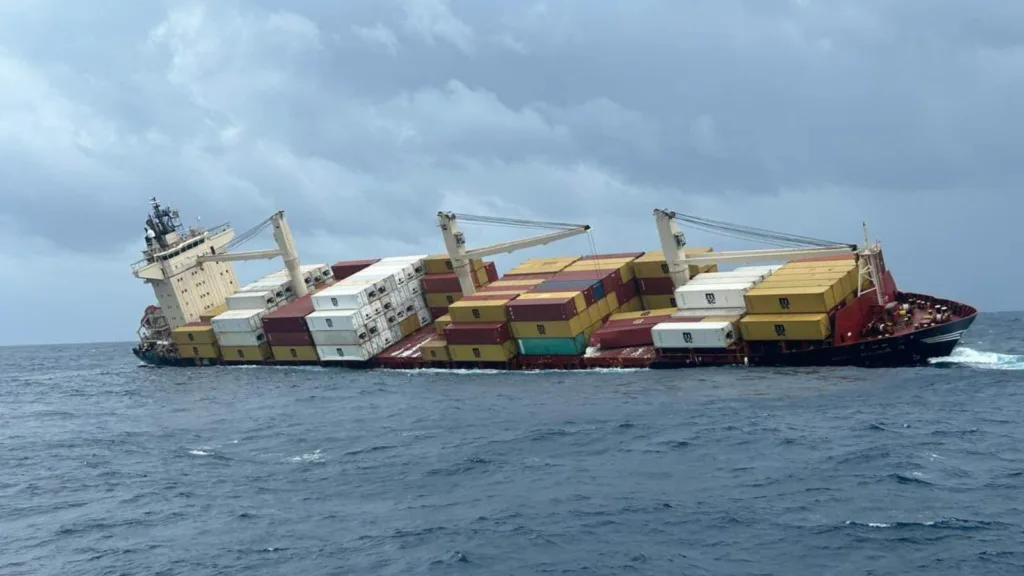
The Indian Navy and Coast Guard are racing against time to prevent an environmental disaster as the MSC Elsa 3 container ship sank off the coast of Kerala on Sunday. The sinking has raised serious concerns about a potential oil spill, prompting scientists to warn of the severe ecological and economic impacts it could have.
Offshore Containment is Key
Marine biologists emphasize the critical need to contain any oil spill as far offshore as possible. Deepak Apte, a leading marine biologist and director of the Srushti Conservation Foundation, explained, "Offshore containment—using booms, sprays, and bioremediation—would be key to controlling any potential spill." He points out that cleanup efforts on land are significantly more challenging, especially during the monsoon season.
Apte draws parallels to the 2010 oil spill caused by the collision of MSC Chitra and MV Khalijia III near Mumbai. That incident released over 800 tons of oil, devastating marine life and mangrove forests. "In 2010, we saw that a lot of oil got deposited in the mangroves and mudflats, and that is extremely difficult to clean up," Apte said.
Monsoon Winds Pose a Threat
The onset of the monsoon season further complicates the situation. "Monsoon has made an onset and the currents are towards the shore. With the monsoon tides and surges, access to shore areas will be difficult for clean ups if the oil slicks reach the coast," Apte explained. He warned that large-scale oil spills could severely impact migratory birds, sea turtles nesting on beaches, and backwater ecosystems.
Impacts on Marine Life and Livelihoods
Grinson George, Director of the Central Marine Fisheries Research Institute (CMFRI), highlighted the potential consequences for marine life and local fishing communities. "If the spill’s extent is large, containment might not be of help. There will be short-term impacts, mostly on small-scale and artisanal fishermen who work closer to the coast. It can affect livelihoods. Oil smothering could threaten marine species and impact pelagic fish breeding," he said.
CMFRI has deployed teams along Kerala’s coast to monitor the situation, collect samples, and assess the ecological impact. Researchers will be analyzing sediment and water samples for oil and grease content and chemical constituents.
Sreenath K R, Director General of the Fishery Survey of India, warned that even a small fuel spill could have a devastating impact on both deep-sea and open-sea ecosystems. "Majority of species breed at this time. The juveniles and larvae are mostly pelagic, and they will be affected, along with plankton. If the oil slick is large, and it spreads towards the southern part of Kerala, there is a chance that corals may get affected," he said.
Hazardous Cargo Raises Concerns
Adding to the concerns, containers from the sunken ship, including some carrying hazardous cargo and calcium carbide, have begun washing ashore in Kollam and Alappuzha. The ship was carrying 84.44 metric tonnes of diesel and 367 metric tonnes of furnace oil.
Ongoing Efforts and Future Implications
While no oil slick or spill has been observed near Kerala’s coastline, the authorities are working tirelessly to contain the situation and prevent a major environmental catastrophe. The coming days will be crucial in determining the extent of the damage and the long-term consequences for the region’s fragile ecosystem.