Will Peace Come to Gaza? Israel and Hamas Negotiate in Qatar

Renewed Talks in Qatar Amidst Rising Tensions
Even as Israel prepares for a possible ground invasion of Gaza, indirect negotiations between Israel and Hamas have resumed in Doha, Qatar. Senior Hamas official Taher al-Nounou told Reuters that both sides are discussing all issues without preconditions. This renewed dialogue comes as international pressure mounts on Israel to find a peaceful resolution to the conflict that ends the war, removes Hamas from power, and secures the release of hostages, without reoccupying the Gaza Strip.
Meanwhile, Israeli airstrikes continue to target Gaza. On Saturday, the eastern part of Deir al-Balah in central Gaza was hit, highlighting the intensifying conflict.
International Calls for Restraint
Italy’s Foreign Minister Antonio Tajani urged Israel to halt the attacks and seek a ceasefire. He stressed the need to protect Palestinian civilians and secure the release of hostages. Similar concerns were echoed by the Dutch government, who called on the European Union to re-evaluate its agreements with Israel.
Piers Morgan, a prominent conservative commentator known for his support of Israel, condemned the situation in Gaza as a “horrific massacre” on social media, calling for Prime Minister Benjamin Netanyahu to be held accountable.
Hamas Proposes Two-Month Ceasefire
According to a Hamas source speaking to the Qatari news outlet Al-Araby Al-Jadeed, the group has entered urgent talks with Qatari mediators to discuss a two-month partial ceasefire. This proposal includes stricter guarantees, including clear commitments from the United States to enforce the agreement.
Hamas official Mahmoud Mardawi confirmed that talks in Doha are ongoing and cover all aspects of the conflict.
Stalemate in Negotiations
However, a senior Israeli official familiar with the negotiations revealed that Hamas hasn’t accepted the original framework proposed by U.S. envoy Steve Witkoff, which outlined the release of hostages and further negotiations. The official expressed pessimism about the chances of reaching a breakthrough.
Escalating Condemnation from Europe
Leaders from several European nations, including Ireland, Iceland, Luxembourg, Norway, Spain, Malta, and Slovenia, issued a joint statement condemning the humanitarian crisis in Gaza. They called for Israel to halt its military operations, lift the blockade, and ensure safe passage for humanitarian aid.
Spanish Prime Minister Pedro Sánchez went further, labeling Israel a “genocidal state” in his country’s parliament. This sparked a diplomatic row, with Israel summoning its ambassador to Spain for a reprimand.
U.S. Concerns Over Humanitarian Crisis
U.S. President Donald Trump acknowledged the suffering in Gaza, stating that “bad things are happening” and that he was “looking at Gaza—and we will deal with it.” Secretary of State Marco Rubio, a staunch supporter of Israel, echoed these concerns, emphasizing the U.S.’s commitment to addressing the humanitarian crisis.
Rubio also addressed criticism of the U.S. aid distribution plan, which involves American contractors delivering assistance directly to Gaza residents. He indicated openness to alternative suggestions following concerns raised by aid groups about the plan’s effectiveness in reaching all civilians.
Military Developments
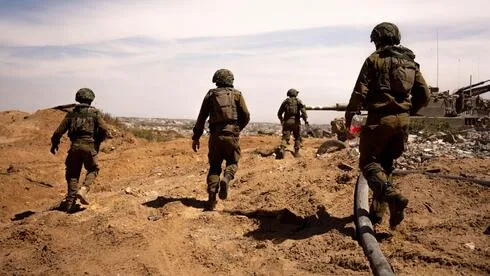
The Israeli military announced the destruction of a two-kilometer Hamas tunnel in northern Gaza, a strategic blow to the group’s infrastructure. The IDF Arabic-language spokesperson, Lt. Col. Avichay Adraee, stated that Hamas is under “heavy fire and pressure—from north to south, underground and above ground.”
The IDF Northern Brigade continues its operations in the northern Gaza Strip, claiming to have killed dozens of militants and destroyed extensive terrorist infrastructure.
Troops unearthed tunnel shafts, explosives, rocket launchers, and various weapons, including rockets and grenades. The IDF stated its commitment to continuing operations against terror organizations in the Gaza Strip to protect Israeli citizens.