Supreme Court Might Shield Federal Reserve from Trump’s Control

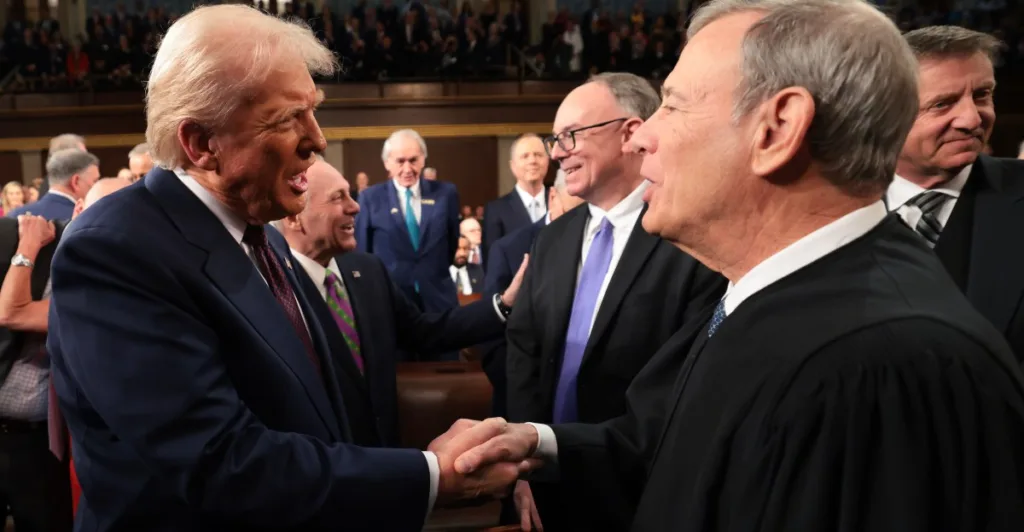
Supreme Court Hints at Protecting the Federal Reserve
In a surprising move, the Supreme Court has signaled that it may not allow President Trump to fire members of the Federal Reserve, despite his efforts to expand his power over independent agencies.
On Thursday, the Court issued a temporary order allowing Trump to fire two federal officials who are typically protected from immediate dismissal. While this isn’t groundbreaking, a paragraph within the order suggests that the Court won’t allow Trump to fire Federal Reserve leaders. This is a significant departure from the Court’s recent trend of supporting a ‘unitary executive’ theory that would give the president absolute control over all executive branch officials.
The Battle Over Independent Agencies
This case, Trump v. Wilcox, is part of a larger debate over the power of the president versus that of Congress. For years, the Court has been chipping away at the protections for independent agencies, which are led by multi-member boards with members who serve for fixed terms and can only be removed for cause.
These agencies, like the Federal Trade Commission, the Federal Communications Commission, and the Federal Reserve, are designed to make decisions based on expertise and not political pressure. Many economists and investors worry that granting the president the power to fire these officials at will could destabilize the economy.
The Federal Reserve’s Unique Position
The Federal Reserve, in particular, is seen as a vital institution for maintaining economic stability. It sets interest rates, influences money supply, and plays a crucial role in preventing financial crises. The Court’s suggestion that the Fed is somehow different from other independent agencies is puzzling to many legal experts.
The order cites the Fed’s historical connection to the First and Second Banks of the United States and its “quasi-private” nature as justification. However, these arguments are vague and lack clear legal grounding.
What’s Next?
The Court has not yet definitively ruled on the constitutionality of firing Fed officials. The Trump administration is likely to continue its push to expand presidential power, and the upcoming Court term could see a full-blown legal battle over this issue.
For now, the Court’s order provides a glimmer of hope that the Federal Reserve will remain independent, but the future remains uncertain.