SpaceX’s Starship Reaches for the Stars, Faces Challenges on Flight 9

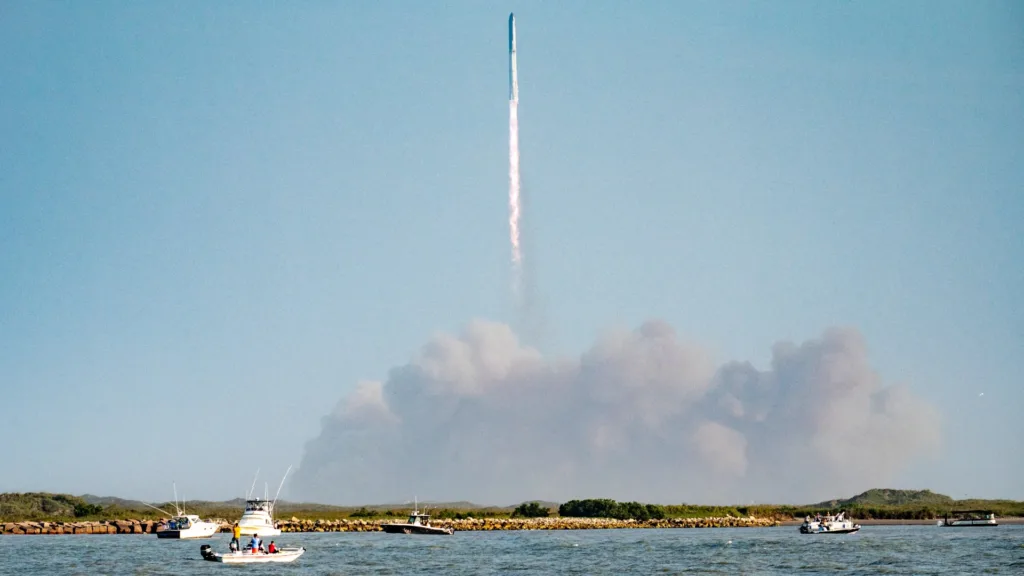
SpaceX’s Starship Takes Flight Again
SpaceX launched its massive Starship megarocket for the ninth time on May 27th, pushing the boundaries of space exploration with a test flight that featured a significant milestone: the reuse of Starship hardware.
A Moment in Space
The two stages of Starship separated as planned, with the upper stage even reaching space, a clear improvement over its previous flights. However, SpaceX ultimately lost control of both stages before they could complete their intended mission.
Elon Musk, CEO of SpaceX, took to social media to celebrate the achievement, saying, “Starship made it to the scheduled ship engine cutoff, so big improvement over last flight! Leaks caused loss of main tank pressure during the coast and re-entry phase. Lot of good data to review.” He also hinted at a rapid launch cadence for upcoming tests, suggesting liftoffs could happen every three to four weeks.
The Starship Program: A Giant Leap for Humanity
SpaceX is developing Starship, the largest and most powerful rocket ever built, with the ambitious goal of enabling humanity to establish a presence on the Moon and Mars.
The vehicle consists of two stages: Super Heavy, a massive booster rocket, and Starship, a 171-foot-tall spacecraft. Both stages are designed for rapid reusability and are powered by SpaceX’s powerful Raptor engines.
A History of Progress and Setbacks
Prior to Flight 9, a fully stacked Starship had successfully launched eight times, each time from SpaceX’s Starbase in South Texas. However, two of these flights, in January and March of this year, encountered problems. Ship exploded less than 10 minutes after liftoff on both occasions.
SpaceX investigated the causes of these failures, attributing them to a “harmonic response” leading to propellant leaks on Flight 7 and a hardware failure in a Raptor engine on Flight 8.
The company made significant hardware changes and conducted extensive engine trials in preparation for Flight 9, aiming to overcome these challenges.
Flight 9: A Mixed Bag of Successes and Setbacks
The launch of Flight 9 took place on May 27th at 7:37 p.m. EDT. It marked the first-ever reuse of a Super Heavy booster, a significant achievement for SpaceX’s reusability goals.
However, Super Heavy did not successfully complete its landing burn and broke apart about 6 minutes and 20 seconds into the flight, preventing a planned splashdown in the Gulf of Mexico.
Ship, on the other hand, reached space but encountered its own set of problems. A payload door malfunction prevented the deployment of eight dummy Starlink satellites, a significant milestone that was unfortunately missed.
Later, a leak in Ship’s fuel-tank systems led to a loss of attitude control, forcing SpaceX to abandon plans for a relight of one of Ship’s Raptors in space and a soft splashdown. Ship ultimately broke apart over the Indian Ocean during re-entry.
Looking Ahead: Learning and Iterating
Despite the setbacks, SpaceX remains optimistic about the Starship program. The company stressed the importance of learning from each flight and iterating on its design and procedures.
Jessie Anderson, SpaceX manufacturing engineering manager, stated, “This is exactly the SpaceX way. We’re going to learn, iterate, and iterate over and over again until we figure it out.” With its ambitious goals and unwavering commitment to innovation, SpaceX is poised to continue pushing the boundaries of space exploration.