
Moon’s Two Faces: Why One Side Looks So Different

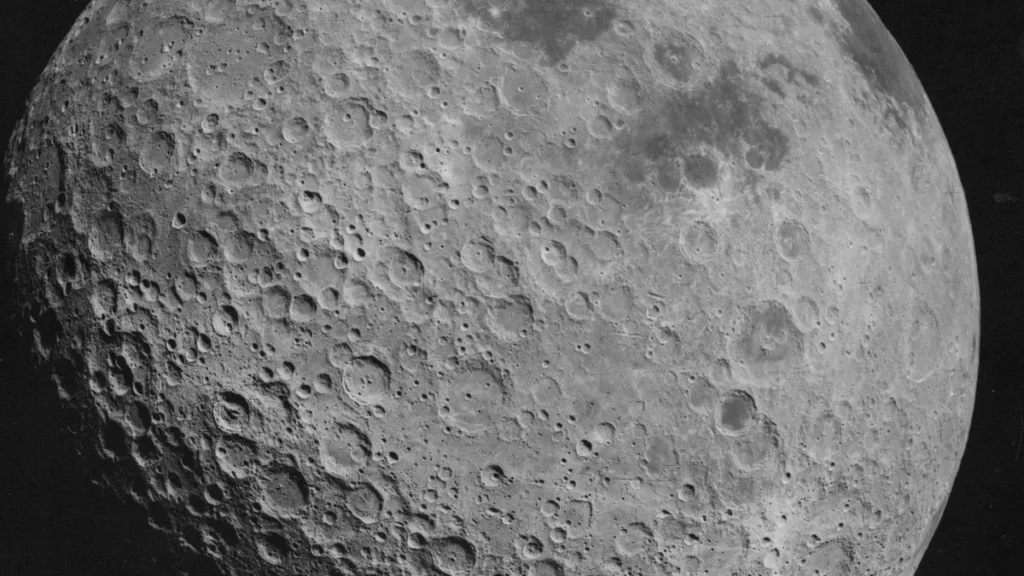
The Moon’s Two Faces: A Tale of Heat and Time
We all know the moon looks different depending on which side faces us. But have you ever wondered why?
The Earth’s moon is tidally locked, meaning one side always points towards us, while the other remains hidden. This is why we only ever see one face of our celestial neighbor. But back in the 1950s, when scientists first got a glimpse of the moon’s far side, they were shocked to see how dramatically different it looked from the side we’re familiar with.
Unveiling the Moon’s Hidden Secrets
A recent study by NASA’s GRAIL mission has shed some light on this mystery. The mission measured tiny changes in the moon’s gravity caused by Earth’s tides. What they discovered was fascinating: the moon’s interior isn’t uniform. The near side, the one we see, appears to be warmer, softer, and even slightly molten.
Scientists estimate a temperature difference of 100-200 degrees Celsius between the two hemispheres. This means there might still be a partially molten layer of rock about 800-1,250 kilometers beneath the near side’s surface.
A History of Volcanic Activity
This molten layer, according to researchers, could have erupted long ago, forming the dark lava plains that characterize the near side. As the moon cooled, these eruptions eventually died out 3-4 billion years ago.
The far side of the moon, on the other hand, has a thicker crust. This means the magma likely never made it to the surface there, leaving behind a different, less volcanic landscape.
Putting the Pieces Together
These findings add to a growing body of evidence explaining the moon’s fascinating two-faced appearance. Other clues include the uneven distribution of radioactive materials on the moon and the way meteorites are more commonly found on the near side, shielded by Earth’s gravity.
The moon’s history is a story of heat, time, and geological processes, ultimately revealing why our closest cosmic companion wears its two faces like a celestial Janus.


