
Breakthrough ‘Magical’ Technique Revolutionizes Cryo-Electron Microscopy

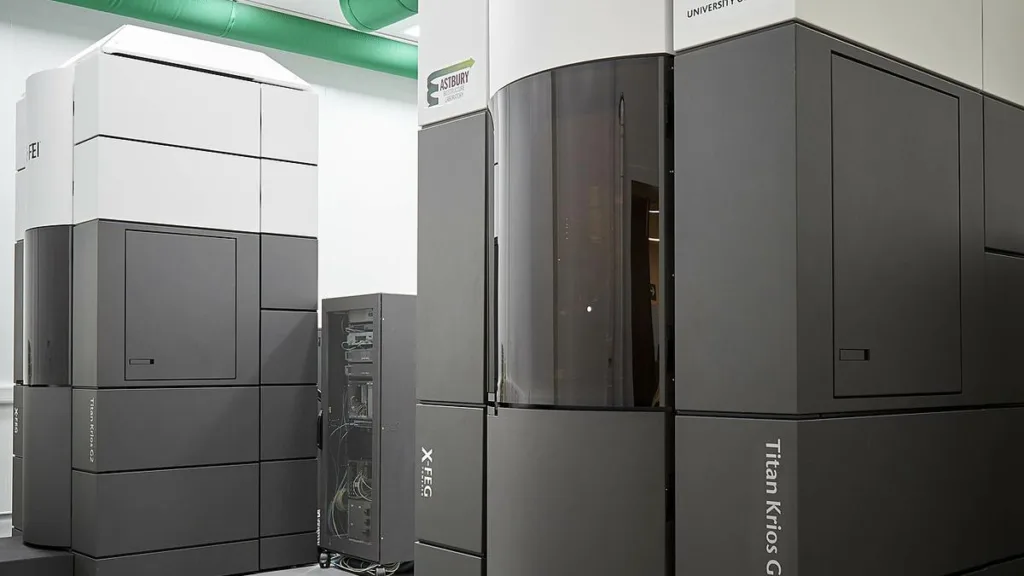
Groundbreaking Method Overcomes Concentration Limitations
Cryo-electron microscopy has long been a powerful tool for scientists to visualize the 3D shapes of biological molecules. However, the technique typically requires extremely concentrated samples, which can be a significant challenge when working with rare molecules.
A New Workaround: MagIC
Researchers in the U.S. have developed a innovative workaround called Magnetic Isolation and Concentration cryo-electron microscopy, or MagIC. This technique enables scientists to study samples that are up to 100 times more dilute than previously possible. The findings were published in eLife in May.
How MagIC Works
The MagIC method involves attaching molecules of interest to 50-nm beads, then using a magnet to clump the beads together. This approach allows for several usable images to be obtained from a single micrograph, even when the solution has a concentration of less than 0.0005 mg/ml of the molecules.
Key Benefits and Enhancements
The beads used in MagIC are easily visible even at low magnification, enabling scientists to quickly locate regions rich in particles and speeding up data collection. To further enhance the technique, the researchers developed a computer workflow called Duplicated Selection To Exclude Rubbish (DuSTER).
DuSTER: Enhancing Image Clarity
DuSTER helps to filter out small particles that often hide in background noise. By selecting each particle twice and retaining only those that land in the same place after two rounds of 2D or 3D classification, DuSTER effectively rescues clear classes from seemingly hopeless images.
Implications and Future Directions
The MagIC technique significantly lowers the sample demand to just 5 nanograms per grid, while DuSTER enhances image clarity. This breakthrough has the potential to greatly expand our understanding of biological molecules, particularly those that are rare or difficult to obtain.
Possible Future Developments
As researchers continue to refine and apply the MagIC technique, we can expect to see new discoveries and a deeper understanding of the complex structures and functions of biological molecules. The impact of this innovation could be far-reaching, enabling scientists to tackle previously intractable problems in fields such as medicine, biotechnology, and materials science.
