
Operation Sindoor: Inside Pakistan’s Loss of Its AWACS

Operation Sindoor: Inside Pakistan’s Loss of Its AWACS
India’s Operation Sindoor, a retaliatory military strike against Pakistan, has revealed a significant blow to Pakistan’s air defence capabilities: the loss of its Airborne Warning and Control System (AWACS) aircraft. This revelation comes from a former Pakistani Air Marshal, Masood Akhtar, who shed light on the incident in a recent interview.
The Bholari Airbase Strike
According to Akhtar, Indian forces launched a series of BrahMos missiles at the Bholari airbase near Karachi, Pakistan’s newest and most advanced airbase. The Pakistani military attempted to protect its AWACS aircraft, but the relentless barrage of missiles ultimately led to the damage of one of the valuable assets.
India confirmed the damage inflicted on the Bholari airbase, and satellite imagery from Maxar Technologies corroborated these claims. The base, inaugurated in 2017, was the site of a joint aerial drill with China in 2020.
The Importance of AWACS
The AWACS is a crucial component of any nation’s air defence system. It acts as a mobile, long-range radar, providing early warning of incoming threats and coordinating air battles. Pakistan operates a fleet of nine Saab 2000 Erieye AWACS aircraft, equipped with the Erieye radar, which offers 270-degree radar coverage.
By neutralising Pakistan’s AWACS capability, India significantly crippled its air surveillance and battlefield coordination abilities, giving India a decisive edge in the conflict.
India’s Strikes and Pakistan’s Response
India’s Operation Sindoor involved targeting 11 military sites across Pakistan, including airbases in Nur Khan, Rafiqui, Murid, Sukkur, Sialkot, Pasrur, Chunian, Sargodha, Skardu, Bholari, and Jacobabad. This operation marked a historic moment as it was the first time a country had successfully attacked the airbases of a nuclear-armed nation in a single operation.
In response, Pakistan acknowledged that one of its aircraft had suffered “minor damage” during the clash with India. However, they did not disclose further details about the type of aircraft involved.
Defence Minister Khawaja Asif, in a surprising admission, acknowledged Pakistan’s history of supporting terror groups, calling it a mistake that has come at a cost for the country.
BrahMos Missiles: A Game-Changer
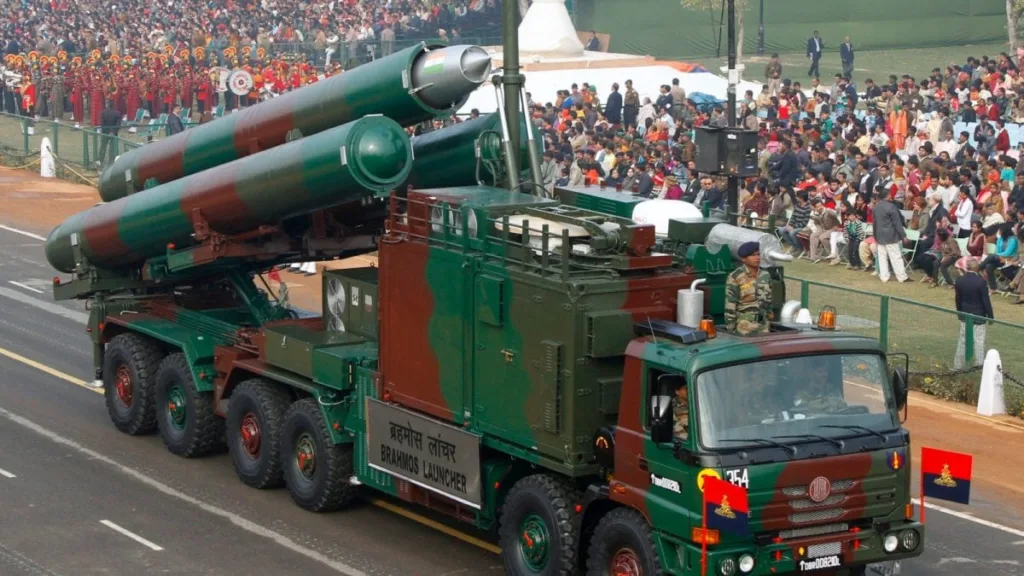
India employed its BrahMos supersonic cruise missiles in Operation Sindoor. Reports suggest that around 15 missiles were launched, targeting critical infrastructure and crippling Pakistan’s strike capabilities. This marked the first time the BrahMos missile system was used in an active conflict, and it exceeded expectations, delivering high-precision strikes.
The Indian Air Force reportedly used dummy aircraft as decoys to lure Pakistan into activating its radar and air defence systems, including HQ-9 missile batteries. Once exposed, India launched loitering munitions, such as Israeli Harop drones, to neutralize Pakistan’s air defence grid.


