
India Reveals Heavy Losses for Pakistan in Retaliatory Strikes

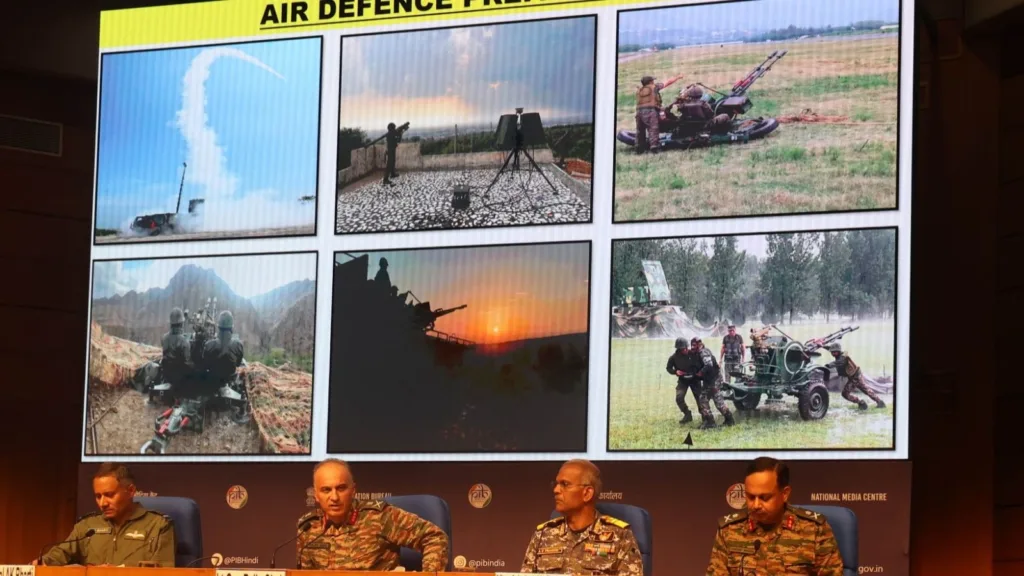
Indian Armed Forces Declare Victory in Operation Sindoor
The Indian army announced significant losses for Pakistani forces following the retaliatory strikes launched as part of Operation Sindoor. In a press briefing on Sunday, Indian officials detailed the operations and their impact on Pakistan’s military capabilities.
Heavy Casualties and Infrastructure Damage
According to Lt General Rajiv Ghai, Director General of Military Operations, the Pakistan Army suffered between 35 and 40 personnel killed in artillery and small arms fire along the Line of Control (LoC) between May 7 and May 10. The Indian Air Force (IAF) also claimed to have downed “a few” Pakistani aircraft and inflicted massive damage on their air bases and assets during the strikes.
Air Marshal A K Bharti, IAF counterpart, described the Pakistani losses as “significant” and confirmed that the Pasrur air defense radar, Chunian air defense radar, Arifwala air defense radar, Sargodha airfield, Rahim Yar Khan airfield, and airfields at the Nur Khan air base in Chaklala, Sukkur, Bholari, and Jacobabad were destroyed by Indian precision strike weapons. He stated, “Definitely, there are losses on their side, which we have inflicted,” adding that these were “hi-tech” aircraft.
Indian Successes and Losses
Lt General Ghai revealed that on the first day of Operation Sindoor, India successfully targeted nine terror hubs, including high-value targets like Yusuf Azhar and Muddasir involved in the hijacking of Indian Airlines flight IC-814 and the Pulwama blast. He reported that 100 terrorists were killed on that day.
Air Marshal Bharti emphasized that the IAF successfully prevented Pakistani aircraft from entering Indian airspace. He stated, “Our robust air defense posture prevented them from coming in.” While confirming five Indian military personnel deaths during Operation Sindoor, he added that all IAF pilots returned home safely.
Ceasefire Violations and Future Actions
Lt General Ghai expressed disappointment over the Pakistani army’s quick violation of the ceasefire agreed upon by the DGMOs. He reported continued cross-border and LoC firing and drone intrusions through Saturday night and Sunday morning. He stated, “The response will be fierce and punitive.” He also shared that Army chief General Upendra Dwivedi granted full authority to Army commanders to counter any further Pakistani actions.
Navy’s Role
Vice Admiral A N Pramod, the Indian Navy counterpart, highlighted the Navy’s readiness during the conflict. He mentioned that the carrier battle group, surface forces, submarines, and aviation assets were deployed in full combat readiness. He emphasized the Navy’s forward deployment in the northern Arabian Sea, capable of striking targets at sea and on land, including Karachi. He stated that Pakistan’s naval and air units were forced into a defensive posture, mostly inside harbors or close to their coast, under constant surveillance by the Indian Navy.
“


