India Rebuffed Pakistan’s Plea for US Help After Air Base Strike

India Rebuffed Pakistan’s Plea for US Help After Air Base Strike
Despite attempts by some Western media to portray India and Pakistan as militarily equal, the reality was starkly different in May 2023. When India struck the Nur Khan air base in Pakistan’s Rawalpindi with missiles, Pakistan scrambled for help from the United States.
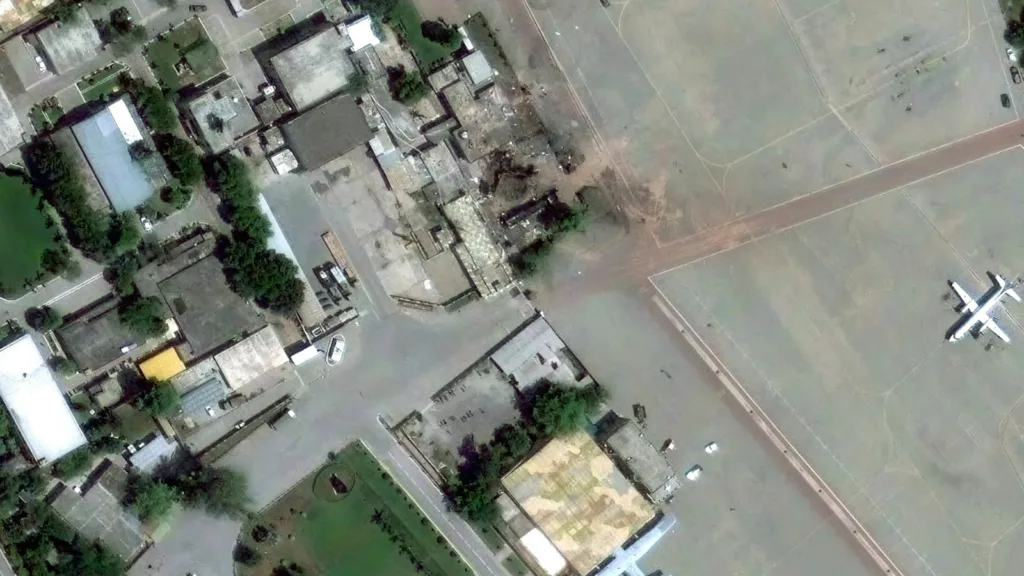
This incident, captured in a satellite image by Maxar Technologies, showed the damage inflicted on the air base after the Indian strike. The Indian Navy also had Karachi naval port in its sights, but ultimately chose not to escalate further.
According to sources, Pakistan’s Director General of Military Operations (DGMO) even called his Indian counterpart, claiming to have intelligence about an impending BrahMos missile strike on Karachi. However, India remained unfazed, ready to respond.
US Secretary of State Steps In
The situation escalated further when US Secretary of State Marco Rubio reached out to his Indian counterparts, External Affairs Minister S. Jaishankar and National Security Advisor Ajit Doval. Pakistan, desperate for a ceasefire, was willing to agree to one. However, India firmly but politely responded that any such proposal had to come through official DGMO channels, as the armed forces were leading the operation.
India ignored calls from Pakistan’s Foreign Minister and its traditional allies urging an end to the hostilities. Meanwhile, Western narratives, including some from French official media, attempted to portray Chinese weaponry as superior to India’s. However, the reality was that India was prepared to escalate the conflict if Pakistan had chosen that path.
India’s Military Advantage
The Modi government was under no pressure to de-escalate because Pakistan had virtually no viable military targets east of the Indus River. India had already neutralized most of Pakistan’s air defense systems and decimated eleven air bases. The Modi government had no intention of striking Balochistan or the Pashtun-dominated Khyber Pakhtunkhwa region. Furthermore, India’s mission objective, to destroy terror infrastructure in Pakistan, had already been achieved within 25 minutes on May 7th.
Interestingly, despite attempts by French state media to undermine the Rafale fighters used by the Indian Air Force, Indian aerial platforms, missiles, loitering munitions, and drones performed exceptionally well, decisively overwhelming Pakistan’s armed forces. After the May 10 missile strike, India still retained the capability to strike any target within Pakistan. Pakistan’s Chinese-supplied air defense systems had either been destroyed or jammed.
India’s Strategic Decision
India ultimately chose to call off hostilities for strategic reasons. The mission objectives had been achieved, and further engagement would only allow Islamabad to play the victim card to the West and China. India and Pakistan are not equals, and New Delhi had no interest in prolonging a conflict after effectively neutralizing Pakistan’s response capability.
Looking ahead, India is expected to take counter-action against all parties who supported terrorist elements following the Pahalgam massacre, including Chinese and Turkish personnel who advised Pakistan on its aerial warfare strategy. India is also placing greater emphasis on stand-off weapons, recognizing that the era of conventional land battles is largely over. By 2028, India will induct 31 US-made Predator armed drones into its armed forces and is rapidly advancing in the development of high-altitude armed drones and low-cost swarm drones, similar to the Turkish models deployed by Pakistan along the Indian border.
While Pakistan will undoubtedly feel the impact of India’s suspension of the Indus Waters Treaty next month, Operation Sindoor has delivered a crucial lesson to New Delhi: India must stand alone and build its own comprehensive military capabilities to counter the real adversaries in its neighborhood and beyond.