
Farooq Abdullah Responds to Congress’s ‘Missing’ PM Modi Remark

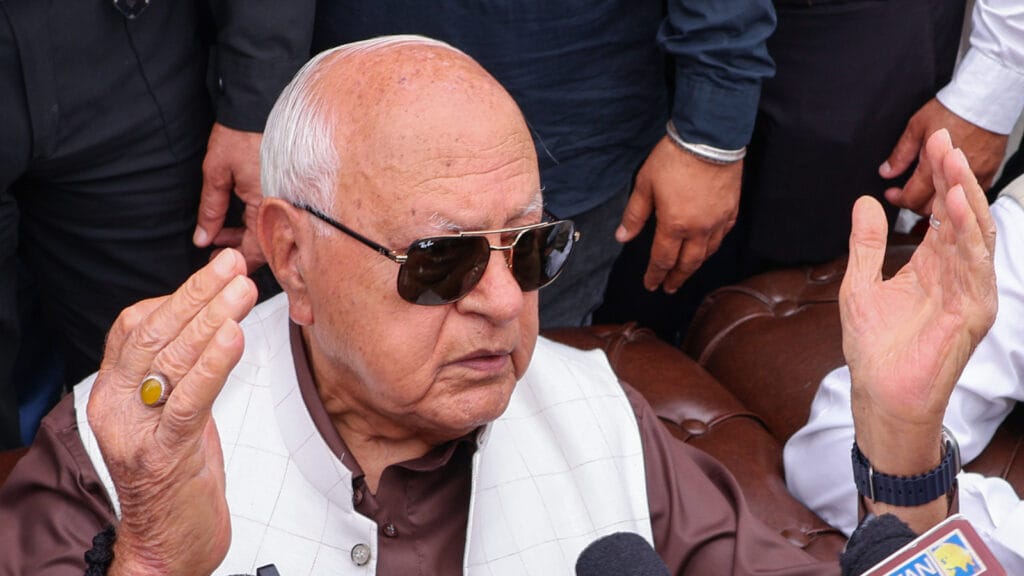
Farooq Abdullah Rejects Congress’s ‘Missing’ PM Modi Remark
Jammu and Kashmir National Conference (JKNC) president Farooq Abdullah took a stand against the Congress party’s recent allegation that Prime Minister Narendra Modi was ‘missing’ amidst rising tensions with Pakistan following the Pahalgam terror attack.
The Congress had posted an image on X (formerly Twitter) depicting an old photo of Modi with his body seemingly missing, accompanied by the Hindi caption ‘jimmedari ke samay — Gayab’ (missing at the time of taking responsibility). The post sparked controversy and was later deleted.
Abdullah, in a statement to the media, said, “Where is he missing? I know he is in Delhi.” He further stated that the National Conference fully supports the Prime Minister and shouldn’t be questioned about it.
Abdullah Addresses Pakistan’s Nuclear Claims
Responding to Pakistan’s repeated assertions of being a nuclear power, Abdullah reminded them that India also possesses nuclear capabilities, adding “We also have nuclear power, and we had it even before them”. He emphasized that India has never initiated an attack and would only use nuclear weapons if attacked first. He expressed hope that such a situation would never arise.
Condemning Pakistan’s past actions, including the Mumbai, Pathankot, Uri, and Kargil attacks, Abdullah stated, “If they want friendship, then such things cannot continue. It must stop. But if they want hostility, we are ready, and so are they.”
PM Modi Grants Armed Forces Operational Freedom
Meanwhile, Prime Minister Modi held a high-level meeting with defense officials, including Defense Minister Rajnath Singh, National Security Advisor Ajit Doval, and the three service chiefs. Following the Pahalgam terror attack, Modi assured the armed forces of “complete operational freedom” in deciding on the mode, targets, and timing of India’s response.
This comes after previous instances of India taking decisive military action against Pakistan, such as the 2016 surgical strikes and the 2019 Balakot air strike.


