
Agniveers: India’s Youngest Soldiers Shine in Face of Pakistani Attack

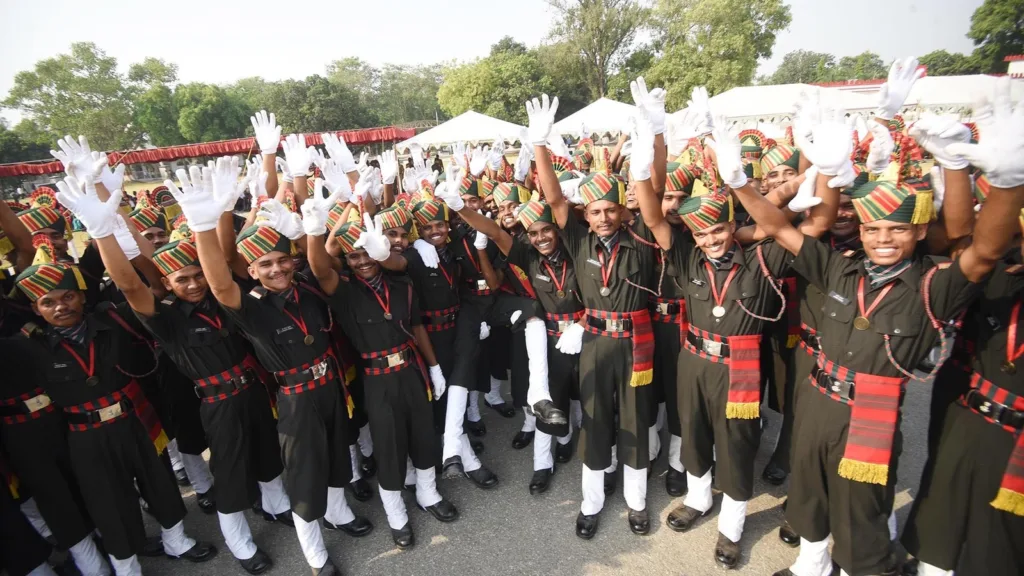
Agniveers: India’s Youngest Soldiers Shine in Face of Pakistani Attack
In a recent clash with Pakistan, thousands of young Agniveers, India’s newest recruits, proved their mettle defending their nation against a barrage of missiles and drones.
Standing Tall in the Face of Fire
During Operation Sindoor, which ran from May 7 to 10, at least 3,000 Agniveers, barely 20 years old and recruited within the last two years, played a crucial role in India’s air defense (AD) system. This came after Pakistan launched a series of attacks on military installations, airbases, and cities across India.
These young soldiers, trained under the Agnipath scheme, rose to the challenge, effectively repelling enemy attempts to target Indian bases and cities. According to sources familiar with the situation, their performance was commendable, matching that of regular soldiers.
Akashteer: A Game-Changer
One of the key factors in India’s success was the Akashteer system, a locally developed air defense control and reporting system. This system, purchased from Bharat Electronics Limited for ₹1,982 crore, proved instrumental in detecting and neutralizing Pakistani threats, effectively serving as the beating heart of India’s multi-layered AD shield.
Agniveers: A Multi-Faceted Force
The Agniveers, deployed across AD units along the western front, excelled in a variety of roles, including:
- Operating shoulder-fired missiles
- Manning and firing guns like the upgraded L-70s and Zu-23-2Bs
- Operating various air defense systems, including Pechora, Schilka, OSA-AK, Strela, and Tunguska
- Manning radars and Akashteer nodes
- Playing a vital role in communication networks
- Driving vehicles used for transporting and launching missiles, including Akash
In addition to their technical skills, they also served as sentries after deploying weapon systems in the combat zone.
The Agnipath Scheme: A New Era for India’s Armed Forces
The Agnipath scheme, introduced in 2022, has been a subject of debate, with its four-year tenure and limited service benefits facing criticism. However, the performance of Agniveers during Operation Sindoor has undoubtedly demonstrated their value and potential.
The scheme aims to keep the armed forces young and battle-ready, and the successes witnessed during this recent conflict highlight its effectiveness.
Beyond Operation Sindoor: A Future for Agniveers
Several government initiatives and private companies have come forward to support Agniveers after their four-year service. Opportunities exist within the Central Armed Police Forces, defense public sector undertakings, and even private companies like BrahMos Aerospace, which has reserved 15% of technical and general administration vacancies for Agniveers.
The recent conflict has cemented Agniveers’ place as a vital asset to India’s defense forces, showcasing their courage, skill, and dedication.


