US in Danger: Limiting Foreign Students Could Hurt Economy, Says Rajan

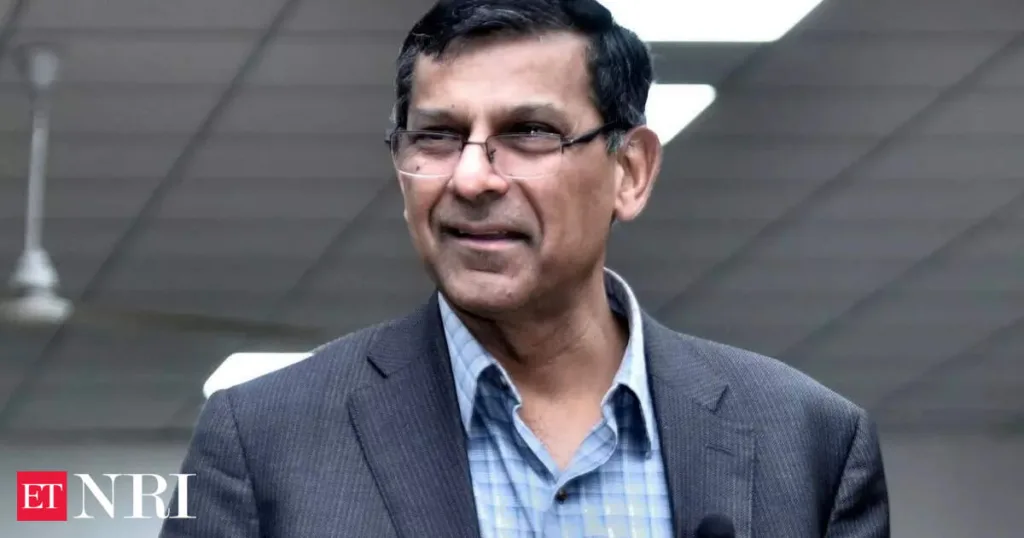
Expert Warns of US Economic Risks from Curbing International Students
Former Reserve Bank of India Governor Raghuram Rajan has sounded the alarm about the potential long-term damage to the US economy if the influx of international students to American universities is stifled by current political climate.
In a recent interview with Bloomberg TV, Rajan emphasized that foreign students have historically been a cornerstone of US innovation and economic strength. He expressed concern that current policies risk undermining this vital advantage.
Google’s Founders: A Case in Point
“The Sergey Brins of the world came as students and did wonders for the US economy,” Rajan noted, referencing the co-founder of Google. “To some extent, the problem is the universities haven’t made the case that they are so central to US growth, but also central to the distribution of that growth.”
Impact on Job Growth and Innovation
Rajan, who is currently a professor of finance at the University of Chicago Booth School of Business, warned that restricting foreign students could negatively impact job creation. He pointed out that companies like Google, a subsidiary of Alphabet Inc., rely heavily on immigration-linked talent pipelines, employing thousands of individuals who originally came to the US as students.
Rajan highlighted the ongoing tension between the White House and universities, a conflict that initially revolved around issues of antisemitism at elite institutions like Harvard and Columbia. However, it has since broadened into a larger debate about the role of US higher education.
Visa Concerns and a Chilling Effect
He cited the Trump administration’s recent directive to US embassies globally to halt student visa interviews as a concerning development. This move, coupled with the administration’s consideration of stricter vetting procedures that include scrutinizing applicants’ social media profiles, has created an atmosphere of uncertainty and fear within the academic community.
“It is not a great environment,” Rajan stated. “It’s an environment which is inhibiting the ultimate production that the universities contribute to the US economy.”
Global Student Presence in the US
International students currently comprise 5.9% of the total US higher education population, which is nearly 19 million. During the 2023-2024 academic year, over 1.1 million foreign students enrolled in US institutions, with India sending the largest number, followed by China.
Rajan drew a parallel between the choices facing foreign students today and the investment decisions made by businesses during times of economic uncertainty. “If uncertainty increases, you tend to either postpone the investment or take it to a place where things are more certain,” he concluded.
“