TCL C7K Mini-LED vs. Panasonic MZ1500 OLED: A Head-to-Head Showdown

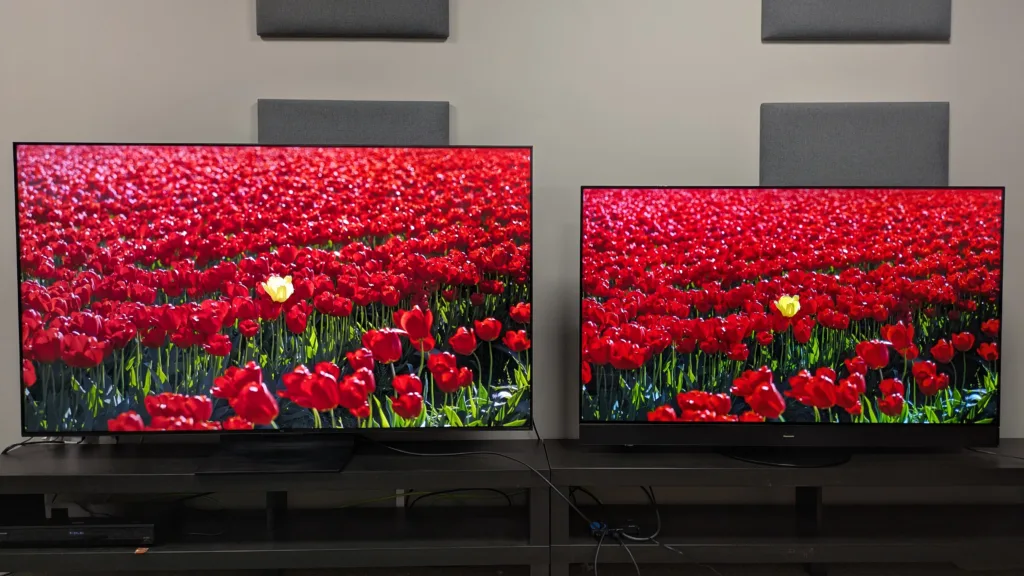
Mini-LED vs. OLED: A Closer Look at the Picture Quality Battle
OLED and mini-LED are currently the two hottest display technologies, each vying for a spot on your TV stand. Both offer a significant upgrade over standard LED TVs, but deciding which one is right for you can be tricky. Traditionally, OLED was the champion for deep blacks and stunning contrast, while mini-LED excelled in brightness. However, the lines are blurring as technology advances, and the gap between these two contenders is shrinking.
Putting the TCL C7K and Panasonic MZ1500 Through Their Paces
To see just how close these technologies have gotten, I put the TCL C7K mini-LED TV (a mid-range model from TCL’s 2025 UK lineup) head-to-head against the Panasonic MZ1500 OLED TV (a 2023 model). While these specific TVs might not be available in all regions, they represent excellent examples of what each technology can offer.
Color: A Vibrant Face-Off
Both mini-LED and OLED TVs have their strengths when it comes to color. Mini-LEDs are known for their bright, punchy colors, while OLEDs often deliver richer, more nuanced tones due to their inherent high contrast. Interestingly, the C7K surprised me with its depth of color, holding its own against the MZ1500. Watching a 4K Blu-ray of ‘Wicked,’ the pink flowers in the ‘Wizard & I’ scene looked vibrant on both TVs, but I found myself drawn to the C7K’s more vibrant display. While the MZ1500 still showcased the benefits of OLED’s self-emitting pixels, the C7K performed admirably.
Black Levels, Contrast, and Detail: A Closer Than Ever Battle
One area where the C7K truly shone was in its black levels. In dark scenes from ‘Alien: Romulus,’ the C7K’s blacks were surprisingly deep and rich, rivaling even the MZ1500 OLED. Contrast was another area where the mini-LED TV impressed. The C7K displayed a great balance of light and dark tones, holding its own against the MZ1500. While the MZ1500 still offered a slightly more 3D-like quality with its textures, the C7K delivered a lifelike presentation.
Screen Uniformity: OLED’s Edge
However, the MZ1500 OLED had a clear advantage in screen uniformity. This refers to the TV’s ability to display large areas of the same color evenly. OLED panels, using self-emitting pixels, excel at this, while mini-LEDs, which rely on backlights, can sometimes suffer from unevenness. When watching black and white scenes from ‘Oppenheimer,’ I noticed subtle streaks of brown on the C7K, a sign of its less-than-perfect uniformity. The MZ1500, on the other hand, displayed a flawless evenness of black and white tones.
The Verdict: Value and Performance
Ultimately, the Panasonic MZ1500 OLED offered the superior picture quality in our comparison. However, there’s a crucial factor to consider: price. The C7K, at around £1,399, is significantly less expensive than the MZ1500, which launched at £2,900. Even a mid-range OLED like the LG C5 costs considerably more. The C7K demonstrates that mini-LED technology has come a long way, offering impressive performance at a more affordable price point.