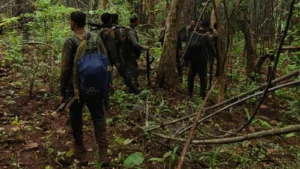
Naxal Leader Killed in Encounter: Outrage From Left Groups, Government Celebrates Success

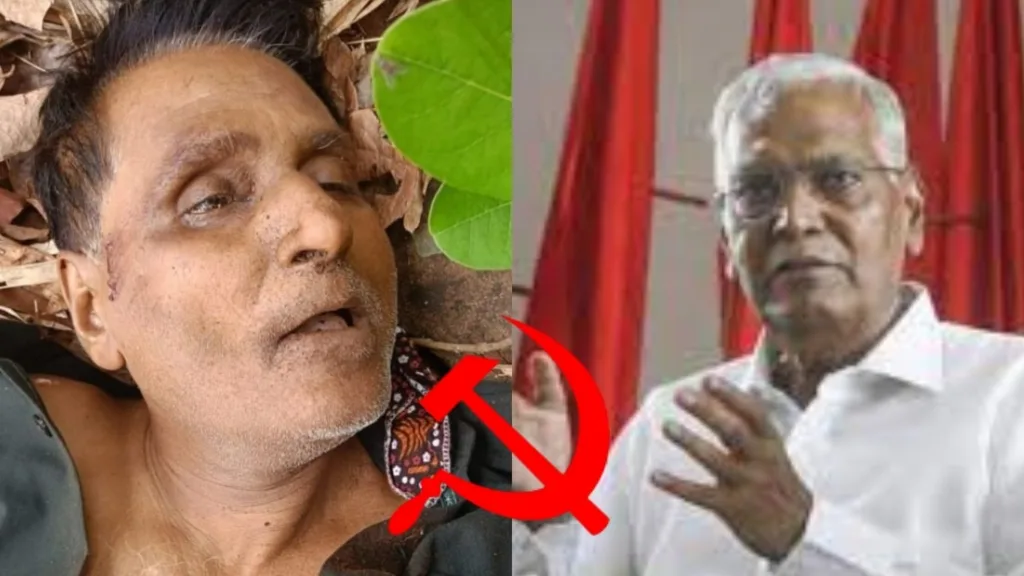
Maoist Leader Killed in Chhattisgarh Encounter
A fierce gunbattle between security forces and Naxal rebels in Chhattisgarh’s Abujhmad area on May 21, 2025, resulted in the death of Nambala Keshav Rao alias Basavaraju, a prominent Naxal leader and the general secretary of the banned CPI(M). The encounter also claimed the lives of 26 other Naxals, marking a significant victory for the government in its ongoing fight against Naxalism.
Basavaraju, who carried a bounty of ₹1.5 crore, was known for his role in orchestrating several deadly attacks on politicians and security forces, including the 2010 Chintalnar massacre of 76 CRPF jawans and the 2013 Jhiram Ghati attack that killed several Congress leaders.
Left Groups Condemn Killing
The killing of Basavaraju sparked outrage among left-wing groups, who condemned the operation as an “extra-judicial killing” and accused the government of suppressing Adivasi protests against corporate exploitation and militarization. The CPI(ML) Liberation, in a statement on X (formerly Twitter), characterized Operation Kagar, launched earlier this year to eradicate Naxalism, as an “extra-judicial extermination campaign” aimed at silencing dissent.
The CPI(M) also criticized the government’s actions, labeling them a “policy of killing and annihilation” and lamenting the celebration of taking human life. D. Raja, the CPI General Secretary, expressed his anguish over the killing, stating that it raised serious concerns about the state’s commitment to democratic norms and the rule of law.
Urban Naxals Defend Basavaraju
Some activists, often labeled “urban Naxals,” defended Basavaraju, portraying him as a champion of the rights of poor Adivasis against injustice. They pointed to his background as an engineer who chose to fight for social justice and condemned the government’s counterinsurgency operations.
These activists had previously urged the government to cease Operation Kagar and engage in peace negotiations with Naxal groups, highlighting the plight of Adivasis caught in the crossfire.
Government’s Counterinsurgency Efforts
The government has been relentless in its efforts to combat Naxalism, which has plagued several states for decades. Operation Kagar, launched in early 2025, aims to dismantle the Naxal network and bring lasting peace to affected areas.
The operation has seen significant success, with the number of Naxal-affected districts steadily declining. In 2015, 106 districts across 10 states were considered Naxal-affected, but by 2024, this number had dropped to 38, and further to 18 by 2025. Out of these, 12 were considered the most impacted by Naxal activities, yet this figure has now fallen to just 6. Earlier this year, a 21-day operation called ‘Operation Black Forest’ near the Chhattisgarh-Telangana border neutralized 31 Naxals and destroyed numerous hideouts and weapons caches.
Union Home Minister Amit Shah has declared an ambitious goal of eradicating Naxalism by March 2026.