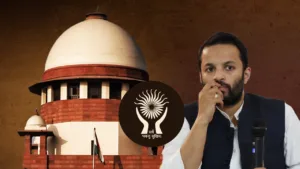
No Relief For Airtel, Vodafone Idea, Tata Teleservices: Supreme Court Dismisses AGR Dues Waiver Petitions

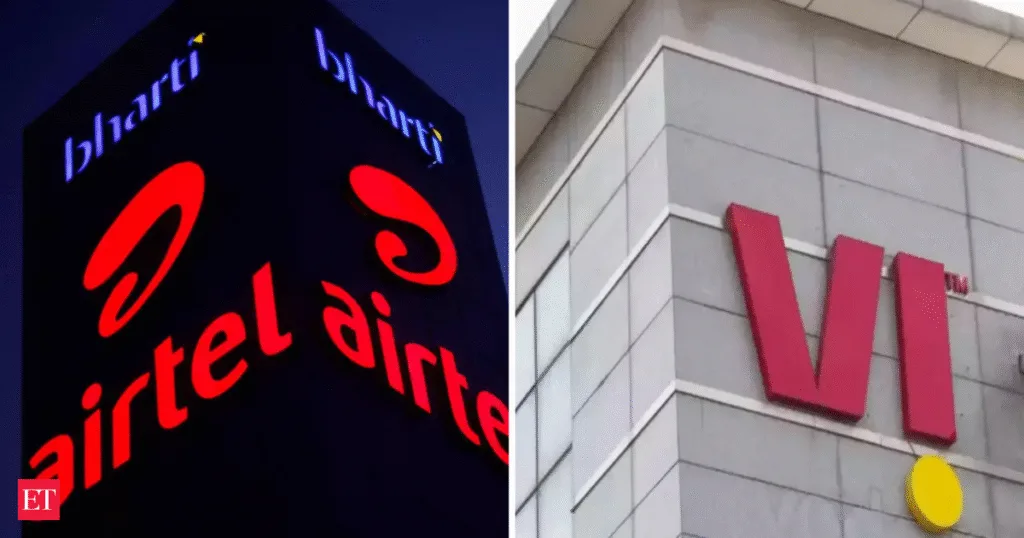
Supreme Court Says No to AGR Dues Waiver
Telecom Giants’ Hopes Dashed
The Supreme Court dealt a blow to telecom giants Airtel, Vodafone Idea, and Tata Teleservices on Monday, dismissing their petitions seeking a waiver of interest, penalties, and interest on penalties related to their adjusted gross revenue (AGR) dues. A bench led by Justice J.B. Pardiwala termed the petitions ‘misconceived’. This decision comes just a day after Vodafone Idea, facing severe financial stress, appealed for a waiver of over Rs 45,000 crore in AGR-related liabilities to stay afloat. Bharti Airtel followed suit with a similar plea, requesting relief on an ‘equitable basis’.
Market Reaction to the Ruling
Following the court’s decision, Vodafone Idea’s shares plummeted nearly 10% as of 1:30 pm on Monday, while Airtel’s share price dropped by 0.2%.
Bharti Airtel’s Plea for Relief
In its petition, Bharti Airtel, along with its unit Bharti Hexacom, sought to waive Rs 34,745 crore in dues related to interest and penalties. They argued that the Supreme Court’s earlier ruling on AGR from September 1, 2020, had caused significant financial strain across the telecom sector.
They emphasized that their intent was not to challenge the court’s ruling but to seek relief from the burden of penalties and interest. They claimed that unequal treatment of telecom service providers (TSPs) by the government would violate Article 14 of the Constitution and undermine the sector’s financial stability, calling for a level playing field for all operators affected by the 2020 verdict. According to their petition, Bharti Airtel and Bharti Hexacom owe a principal AGR amount of Rs 9,235 crore. However, when adding interest (Rs 21,850 crore), penalties (Rs 3,995 crore), and interest on penalties (Rs 8,900 crore), the total liability balloons to Rs 43,980 crore. The Department of Telecommunications (DoT) pegged the dues at Rs 38,397 crore as of March 31.
Vodafone Idea’s Dire Situation
Vodafone Idea, in its separate petition, cited an AGR liability of Rs 83,400 crore, including Rs 12,797 crore in principal dues, Rs 28,294 crore in interest, Rs 6,012 crore in penalties, and Rs 11,151 crore in interest on penalties. The company warned that without relief, its survival is at risk, potentially affecting around 200 million subscribers.
They also pointed out that while the government had converted a portion of its dues—about Rs 39,000 crore—into equity, it still owed nearly Rs 1.19 lakh crore in spectrum and AGR-related dues. Both telcos emphasized that substantial relief packages had already been granted by the government post-AGR verdict and urged the court to direct the Centre to act fairly and avoid insisting on punitive interest and penalties.
Previous Rejections of Relief
Earlier, Airtel had written to the telecom department, inquiring whether it could convert its AGR dues of Rs 41,000 crore into equity, similar to Vodafone Idea. The government has yet to respond. This is not the first time the Supreme Court has rejected pleas for relief related to AGR dues. In February, the court dismissed a set of review petitions from telecom operators seeking rectification of alleged errors in the DoT’s assessments. A subsequent batch of curative petitions was also dismissed in September 2023.
The AGA Verdict and Its Impact
According to the 2020 AGR verdict, telecom operators owed Rs 1.47 lakh crore in dues—comprising Rs 92,642 crore in licence fees and Rs 55,054 crore in spectrum usage charges. About 75% of these dues were attributed to interest, penalties, and interest on penalties. The court had ordered telecom companies to clear their AGR arrears over a 10-year period, beginning with a 10% upfront payment by March 31, 2021. Annual installments are due every March until 2031. The court also warned that no reassessment of dues would be allowed, and any default would attract additional penalties, interest, and contempt of court proceedings.