
India Strikes Key Pakistani Airbases: Operation Sindoor Sends Shockwaves

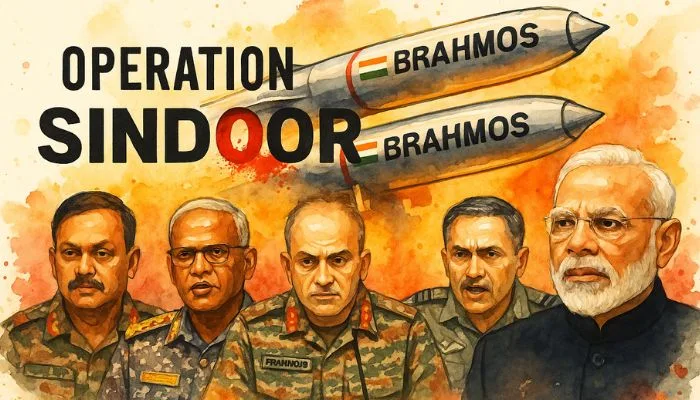
India Launches Precision Strikes on Pakistani Airbases
In a major escalation, the Indian Air Force (IAF) carried out precision strikes on 11 Pakistani airbases in the early hours of May 10th. Among the targeted bases were three critical airbases in Pakistan: Jacobabad, Chaklala (Rawalpindi), and Sargodha. This operation, codenamed ‘Operation Sindoor,’ sent shockwaves through Pakistan’s military command.
Key Targets and Their Significance
These three airbases are essential for the operation, maintenance, and deployment of Pakistan’s F-16 fighter jets, supplied by the United States. They also house vital infrastructure, including training facilities and ammunition stockpiles.
Chaklala: A Strategic Hub
The attack on Chaklala was particularly significant. Not only is it a major transport hub, but it also houses Pakistan’s air-refuelling assets, extending the range of its fighter jets. Chaklala is home to key transport squadrons and is crucial for logistical and strategic airlift operations, housing aircraft like the C-130 Hercules and IL-78 mid-air refuelers. Critically, it is also in close proximity to Pakistan’s Strategic Plans Division, which oversees the country’s nuclear arsenal.
Impact and Pakistan’s Response
Major damage to these airbases could severely cripple the Pakistan Air Force, making several key assets unusable. This strategic blow prompted Pakistan Army Chief General Asim Munir to seek immediate intervention from the United States. General Munir reached out to US Secretary of State Marco Rubio, urging him to de-escalate the escalating tensions with India.
US Diplomacy and a Call for Pause
At Pakistan’s request, Rubio spoke to Indian External Affairs Minister Dr. S. Jaishankar, urging both nations to engage in dialogue. The US also offered to mediate and help prevent further conflict. Following these diplomatic efforts, Pakistan’s Director General of Military Operations, Maj Gen Kashif Abdullah, called his Indian counterpart, Lt Gen Rajiv Ghai, proposing a pause in hostilities. Indian officials saw this as a direct consequence of the successful neutralization of Pakistan’s air defenses and infrastructure.
Shifting Military Balance
India’s operation targeted a total of 11 Pakistani airbases and two radar sites. This massive attack in a short timeframe has dramatically altered the regional military balance. Pakistan’s inability to respond highlighted the technological gap between the two nations and its outdated military preparedness compared to India’s advanced capabilities.
India’s Position and the Path Forward
While US President Donald Trump claimed credit for the ceasefire, India has firmly denied any third-party involvement in its decision to de-escalate. India maintains that the arrangement is not a ceasefire but an understanding, and it will continue to monitor Pakistan’s actions closely. Operation Sindoor, according to India, remains active.
Seeking UN Action Against TRF
As Pakistan grapples with the consequences of the strikes, India has intensified its diplomatic efforts to designate The Resistance Front (TRF), an offshoot of Lashkar-e-Taiba, as a terrorist organization at the UN Security Council. TRF claimed responsibility for the April 22nd Pahalgam terrorist attack, and India has submitted a dossier implicating Pakistan’s role. However, with China’s backing, Pakistan continues to shield TRF at the UNSC.


