Indian Army Strikes Again: Operation Keller Eliminates 3 LeT Terrorists

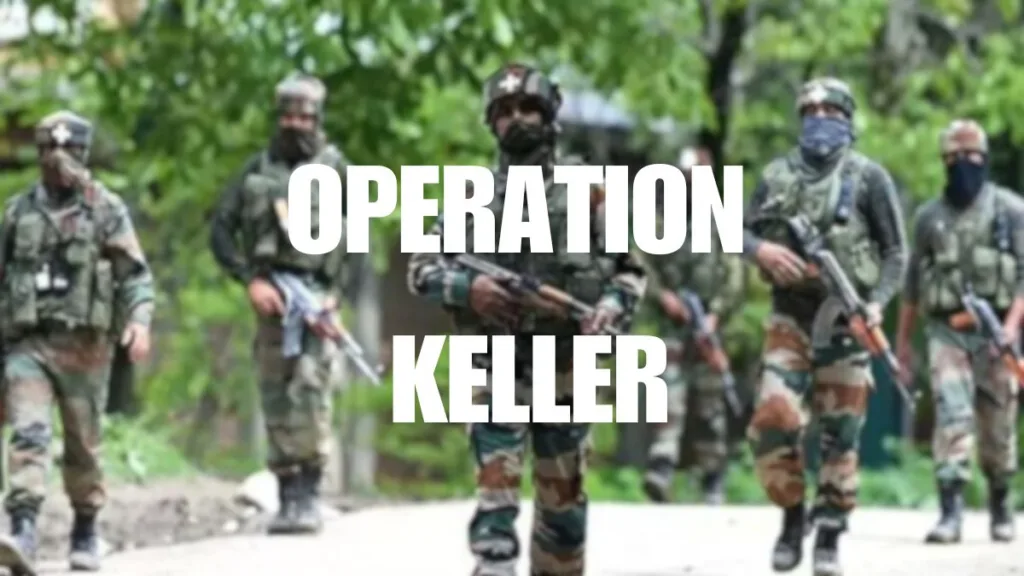
New Delhi – In a significant victory against terrorism in Jammu and Kashmir, the Indian Army neutralized three Lashkar-e-Taiba (LeT) terrorists in a fierce encounter at the Keller forest area of Shopian district on Tuesday, May 13. The operation, codenamed ‘Operation Keller,’ followed specific intelligence reports about the presence of heavily armed terrorists in the region.
Spearheaded by units of the Rashtriya Rifles, the operation involved a cordon and search operation that quickly turned into a fierce firefight as the terrorists opened fire on the advancing security forces. The intense exchange of fire lasted for an extended period, ultimately leading to the elimination of all three terrorists. Their bodies were recovered from deep within the dense forest.
The slain terrorists were identified as Hussain Thokar, a local from Anantnag, and two others believed to be Pakistani nationals – Ali Bhai, also known as Talha Bhai, and Hasim Musa, alias Suleiman. All three were confirmed to be associated with the Pakistan-based Lashkar-e-Taiba and involved in various terror-related activities in the region.
This operation comes on the heels of ‘Operation Sindoor,’ a major strike launched by Indian armed forces on May 7 targeting terror camps in Pakistan and Pakistan-occupied Kashmir (PoK). The success of ‘Operation Keller’ further strengthens India’s ongoing counter-terrorism efforts in the Valley.
About Lashkar-e-Taiba
Lashkar-e-Taiba, formed in the late 1980s as the militant wing of Markaz-ud-Dawa-wal-Irshad, follows an extremist ideology rooted in the Wahhabi school of Sunni Islam. Initially focused on destabilising Jammu and Kashmir, LeT has expanded its agenda to encompass operations across India, advocating for Islamic rule over the entire subcontinent. Recognized as one of the most dangerous and active terror outfits in South Asia, Lashkar-e-Taiba has been designated a terrorist organization by India, the United Nations, and several countries, including the United States, United Kingdom, and Canada.
Pakistan-Sponsored Terrorism in J-K and India’s Response
Jammu and Kashmir has been at the forefront of India’s battle against Pakistan-sponsored terrorism. Since the late 1980s, cross-border infiltration, armed militancy, and radicalization fueled by Pakistan-based terror outfits have posed a continuous threat to peace and stability in the region. In response, the Indian Armed Forces have evolved into a resolute, intelligence-driven, and tactically superior force that has repeatedly thwarted attempts to destabilize the Valley.
Pakistan’s strategy has heavily relied on proxy warfare – training, arming, and infiltrating terrorists across the Line of Control (LoC). Groups like Lashkar-e-Taiba (LeT), Jaish-e-Mohammed (JeM), Hizbul Mujahideen, and others have found safe havens in Pakistan, operating with impunity under the patronage of its government, military and intelligence agencies. Their objectives have ranged from inciting local unrest to orchestrating major attacks on civilians, armed forces, and critical infrastructure.
Meanwhile, India’s counter-terrorism strategy has undergone a significant transformation over the years. From conventional army operations in the 1990s to today’s surgical strikes, precision-based intelligence operations, and the use of modern surveillance, the Indian Armed Forces have relentlessly adapted to the changing face of terrorism.