
India-Pakistan Standoff: A Test of Chinese Arms Exports?

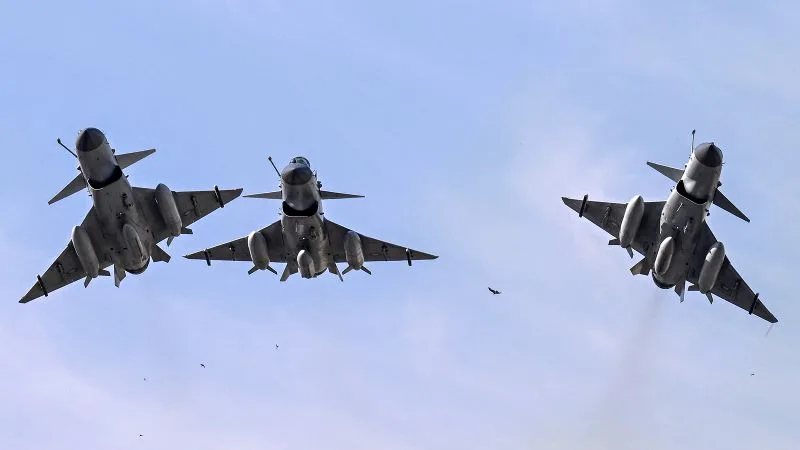
China’s Military Tech on the Line
The escalating conflict between India and Pakistan has suddenly thrust China’s military technology into the spotlight. Shares of AVIC Chengdu Aircraft, the maker of China’s J-10C fighter jets, surged after Pakistan claimed to have used these jets to shoot down Indian aircraft, including advanced French-made Rafales. While India hasn’t confirmed any losses, the situation has ignited speculation about the effectiveness of Chinese-made weapons in a real-world conflict.
China’s Growing Military Might
China, a rising military superpower, hasn’t engaged in a major war for over four decades. However, under leader Xi Jinping, the country has aggressively modernized its armed forces, investing heavily in sophisticated weaponry and cutting-edge technologies. China has also become Pakistan’s primary arms supplier, providing 81% of its imported weapons over the past five years. This includes advanced fighter jets, missiles, radars, and air-defense systems that experts believe would play a crucial role in any conflict between India and Pakistan.
A De Facto Test for Chinese Arms
China’s growing military support for Pakistan has raised concerns in India and the West. Analysts see this conflict as a de facto test for Chinese military exports, a chance to showcase the capabilities of their weapons systems on a global stage.
Sajjan Gohel, international security director at the Asia-Pacific Foundation, explains, “Any engagement between India and Pakistan is a de facto test environment for Chinese military exports.”
Pakistan’s Military Arsenal
Pakistan’s air force operates a mix of American-built F-16s and Chinese-made J-10Cs and JF-17 Block III fighters. While the PAF’s F-16s are outdated compared to modern Western versions, the J-10CEs and JF-17 Block IIIs feature advanced technologies like AESA radars. The recent deployment of the PL-15, China’s most advanced air-to-air missile, further enhances Pakistan’s air combat capabilities.
Implications for China’s Arms Industry
If confirmed, the downing of Indian aircraft by Chinese-made J-10Cs would be a significant boost for China’s arms industry. It could attract attention from countries in the Middle East and North Africa seeking modern weaponry that might be unavailable elsewhere.
Antony Wong Dong, a Macau-based military observer, believes, “This is essentially a powerful advertisement for China. It will shock even countries like the United States — just how strong is its opponent, really?”
Cautious Optimism
While the situation presents a potential showcase for Chinese military technology, some experts caution against jumping to conclusions. There are questions about whether India’s reported losses were due to tactical errors or the effectiveness of Chinese weapons. Furthermore, the success of India’s missile strikes against Pakistani targets suggests that its own military capabilities remain formidable.
Ultimately, the India-Pakistan conflict is a complex and evolving situation. Its outcome will have significant implications for regional security and the global arms market. The world is watching closely to see how Chinese military technology performs in this high-stakes showdown.


