
Say Goodbye to Skype: Microsoft Teams Takes Over

Skype Says Farewell After 23 Years
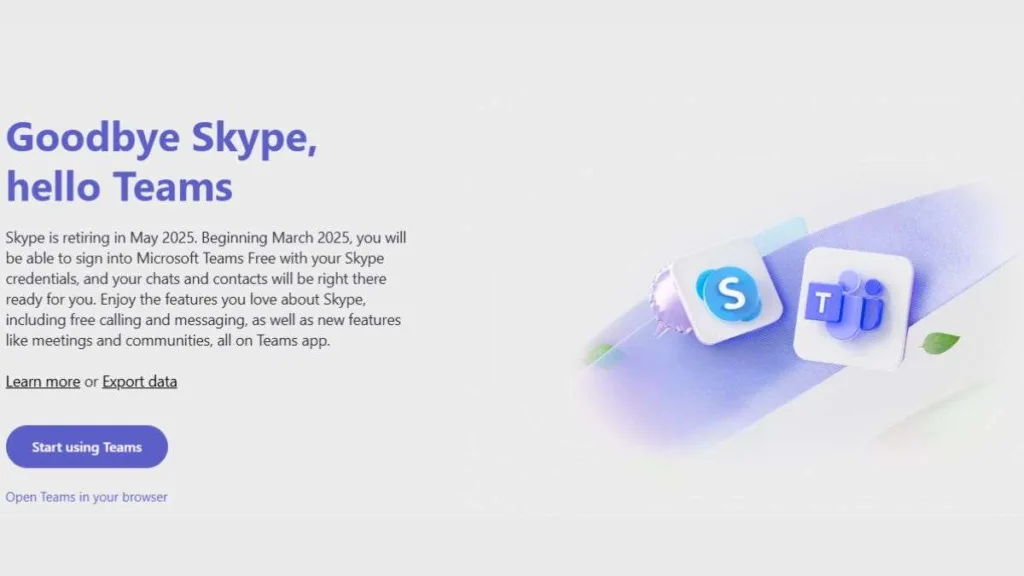
After two decades of connecting people around the world, Skype is officially signing off. On May 5, 2025, the popular video calling platform will cease to exist, marking the end of an era for online communication. Microsoft, which acquired Skype back in 2011, has been pushing users to transition to Microsoft Teams, its more modern and feature-rich platform.
Why the Change?
Skype’s decline can be attributed to the rise of newer competitors like Zoom, Google Meet, and of course, Microsoft Teams itself. These platforms offered more advanced features, better integration with other tools, and a more user-friendly experience. The pandemic further accelerated this shift, with remote work becoming the new norm and demanding more robust communication tools.
What About Your Data?
Don’t worry, your chats and contacts won’t disappear into thin air. Microsoft is making the transition as smooth as possible. You can simply sign in to Teams using your existing Skype credentials, and all your chat history, contacts, and caller ID data will be automatically transferred.
If you prefer to keep your data separate, Microsoft also allows you to download your Skype data before the service shuts down. This includes shared files, chat messages, and contact lists, which you can access through the account settings on the Skype web portal.
Microsoft Teams: The Successor
Microsoft Teams is designed to be a comprehensive communication hub for both work and personal use. It offers a wide range of features, including:
- Video meetings for up to 10,000 participants
- Real-time document collaboration
- App integrations for seamless workflow
These features have made Teams a popular choice for businesses and individuals alike, solidifying its position as the successor to Skype.
A Legacy Remembered
While Skype’s time is coming to an end, its impact on online communication will never be forgotten. It revolutionized the way we connect with loved ones, enabled remote work before it was mainstream, and shaped our expectations for video calling. As Skype fades away, its spirit lives on in Microsoft Teams and the ever-evolving world of digital communication.


