A Shift in Power: ABVP Makes Inroads at JNU, Breaking a Decade-Long Left Stronghold

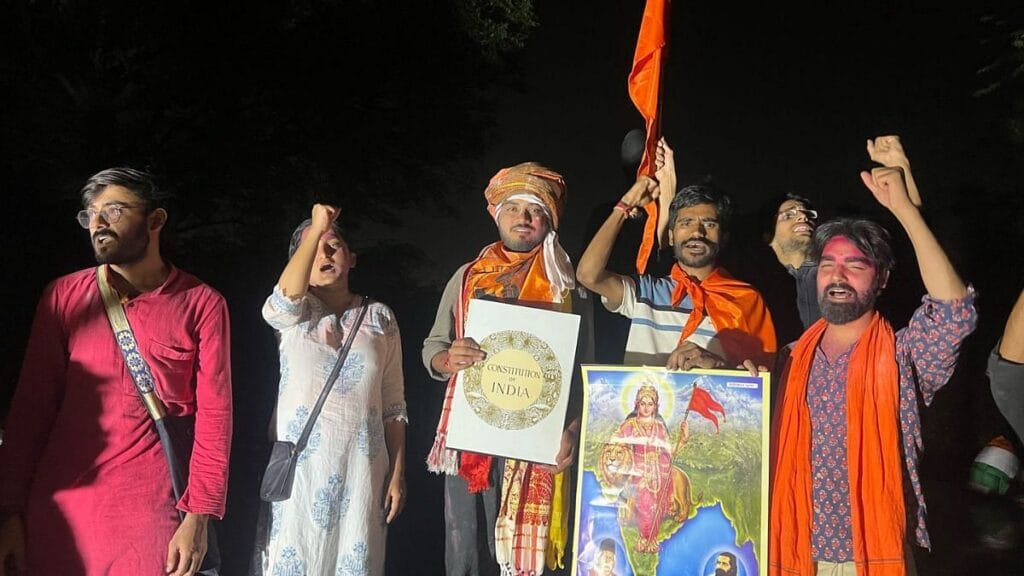
ABVP Breaks Through at JNU
This year’s Jawaharlal Nehru University Students’ Union (JNUSU) elections saw a major shakeup, with the Rashtriya Swayamsevak Sangh-affiliated Akhil Bharatiya Vidyarthi Parishad (ABVP) securing a central panel seat for the first time in a decade. This victory marks a significant shift in the political landscape of JNU, a university traditionally dominated by Left-aligned student groups.
ABVP’s Vaibhav Meena won the joint secretary position, defeating the candidate from the AISA-DSF (Democratic Students’ Front) United Left Panel by a narrow margin of 85 votes. This victory comes after a period of increased ABVP presence on campus, but highlights the impact of a split within the Left.
A Divided Left
The ABVP’s success can be partly attributed to a split among the Left-aligned student groups. The Students’ Federation of India (SFI), affiliated with the Communist Party of India (Marxist), and the All India Students’ Association (AISA), aligned with CPI (Marxist-Leninist) Liberation, formed separate alliances, weakening their collective strength.
This division allowed ABVP to capitalize on the split vote. The margins for other central panel positions were also very close, with the ABVP candidate trailing in the presidential and general secretary races by relatively small margins.
Reflections on the Result
Students on campus see ABVP’s victory as a reflection of both the national political climate and the internal dynamics of JNU. The BJP’s success in consolidating its support base while strategically dividing its rivals has arguably found an echo in JNU.
However, some argue that the ABVP’s victory should not be overstated. N. Sai Balaji, former JNUSU president and AISA member, points out that the ABVP failed to win a single councillor seat from the School of Languages, the university’s largest school.
Looking Ahead
The ABVP has celebrated its victory as a “democratic revolution” against the Left’s “ideological control.” AISA, on the other hand, calls it a “shock” and emphasizes the need for progressive forces to unite in the face of this challenge.
The split within the Left and the ABVP’s rise to prominence raise important questions about the future of student politics at JNU and the broader national political landscape.